

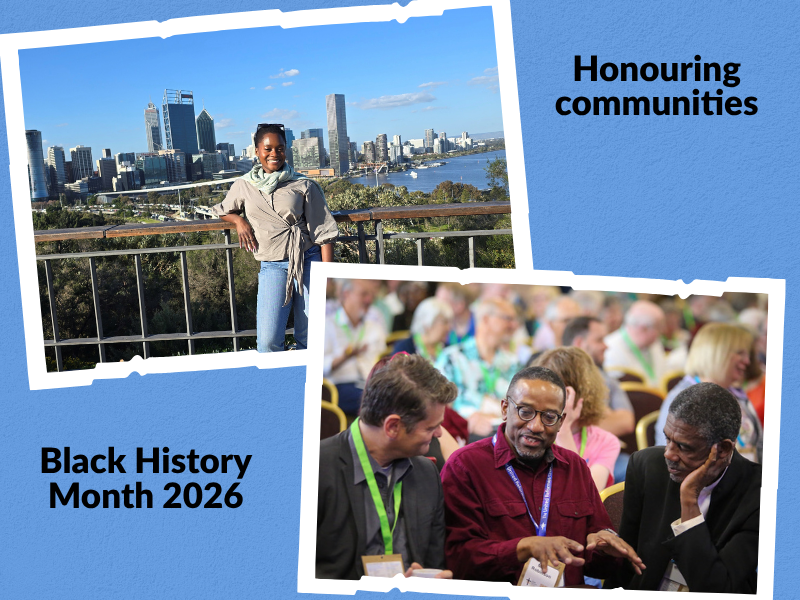
For Black History Month 2026, a variety of Global Majority United Reformed Church ministers share their personal perspectives around the theme of “Honouring Communities”.
In this reflection, Philippa Osei, who made history by becoming the first Black URC Youth Assembly Moderator, reflects on her experience of being a child of the diaspora, while the Revd Mark Robinson, Minister of Broxbourne and Hertford URCs within the North Lea Valley Group Pastorate, reflects on the communities that shaped him:
Philippa:
I am a third generation immigrant to the United Kingdom from Ghana with deep cultural ties to Jamaica, where I spent my formative years. This blend of heritage sets me apart and integrates me to a huge community of visionaries, speakers, organisers, and preservers from Kwame Nkrumah, former President of Ghana, to Ms Louise Bennet, a Jamaican poet, folklorist, actress, writer and educator.
To me, honouring our communities means holding each person as precious, with talents, thoughts and gifts enabling them to thrive and actualise in a safe and nurturing environment. There is no stronger example of this than the care and support that has borne me thus far.
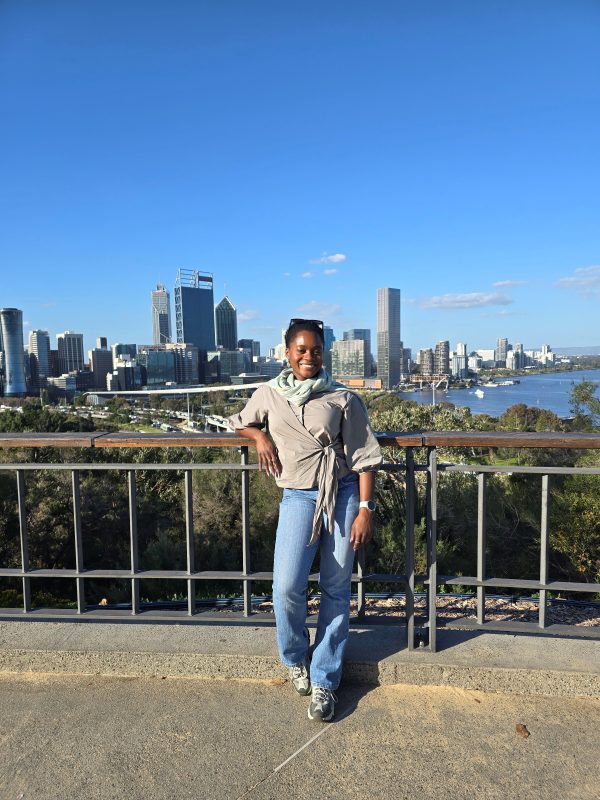
As a precocious child and later an idealistic teenager, I was encouraged to join in with the URC Youth Assembly, becoming Moderator, and pushed to excel in academics by several members of my community. My community comprises my mum and brother, uncles and aunts (blood-related or chosen family), and friendships curated across time and borders. They buoy every uncertain step, propelling me into materialising things I had only dreamed of.
This has been fundamental to the young adult I have become, with skills and experience in both social advocacy, bringing me to Singapore with the Council for World Mission, and a budding career in medical research as I enter a new chapter as a PhD candidate in cancer research.
The best I can hope for is to pay this support back in kind to those who are coming up behind and the community which buds up around me. I bring the wealth of my Akan heritage and Jamaican life experience, linking continents and ideas as I move forward.
Mark:
“I am Black and beautiful.”*
There is something compelling about hearing the woman in the Song of Songs name herself. Before anyone else can tell us who she is, she speaks in her own voice.
I have been thinking about those words while reflecting on the communities that have shaped me: family, Caribbean communities, Black communities, churches and the communities among whom I have lived and ministered. I have come to understand that community does more than give us somewhere to belong. At its best, community helps us discover the language with which we can name ourselves.
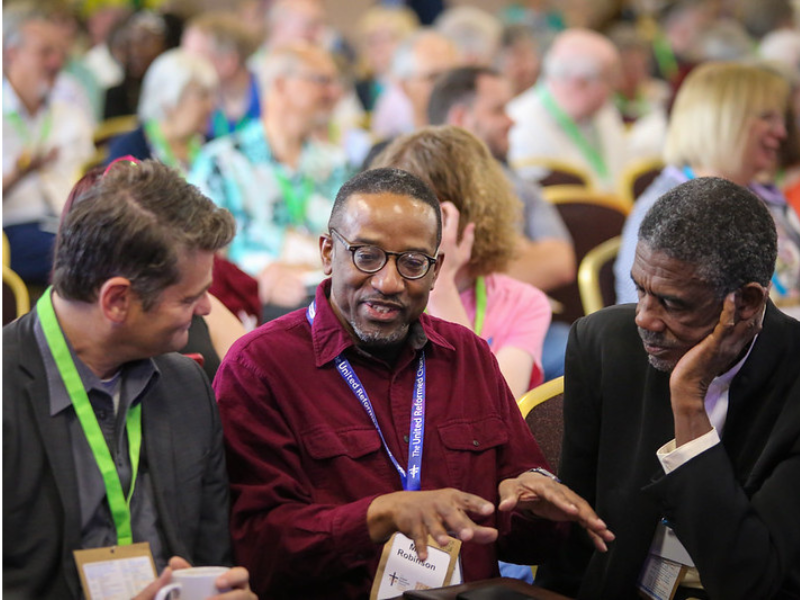
I experienced something of this again recently while spending time with family in the Caribbean after many years apart. There were stories relived, family and friends named, connections recovered and histories remembered in ordinary conversation. I was reminded that part of knowing “who we are” comes through people who remember where we have come from.
For Global Majority people living in Britain today, that has resonance. We live among many names given to us by others. Some help us speak about shared experiences; others can contain assumptions about where we belong, what we contribute and whose voices are expected to shape our common life.
The woman of the Song speaks differently: “I am Black and beautiful.” She claims the right to speak from within her own life.
Perhaps honouring our communities begins where the woman of the Song begins, by listening to people as they name themselves, tell their own histories, bring their gifts and speak of God from within their own experience.
My communities have given me memories and ways of seeing God, understanding myself and recognising my responsibility towards others. I carry something of family, Trinidad and Tobago, Barbados, St. Vincent, Britain, church and generations whose lives have touched mine.
Within the United Reformed Church, our Global Majority communities bear such gifts too. Honouring them means receiving their presence, histories, leadership and theological wisdom as part of who we are becoming together.
I honour the communities that formed me when I remember what I have received and help create communities in which others can say, in their own voices and with confidence, who they are.
*(Song of Songs 1:5. The NIV reads, “Dark am I, yet lovely.” Here I follow the Hebrew more directly: “I am Black and beautiful” (sheḥorah ani wenawah), where the conjunction waw can be rendered “and”).