

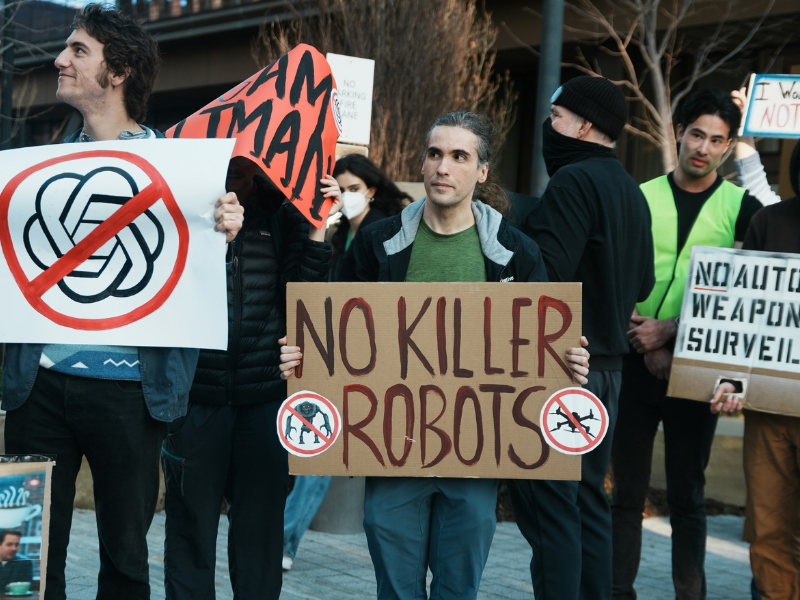
The Revd Neil Thorogood, Moderator of the United Reformed Church General Assembly, has joined more than 30 leaders from churches and Christian organisations in signing an open letter to the foreign secretary calling for the UK to back international regulation of autonomous weapons.
The signatories include senior representatives from the Church of England, Church of Scotland, Scottish Episcopal Church, Baptist Union, Methodist Church, United Reformed Church and the former Archbishop of Canterbury Rt Revd Dr Rowan Williams.
Later in November, nations face a decisive moment to establish legally binding rules on autonomous weapons systems. Countries could start negotiations on a treaty for autonomous weapons, but for these discussions to have the best chance of success, the UK must commit to doing everything within its power to open negotiations.
Ahead of this critical meeting, Christian leaders have expressed their concern about the algorithms being able to take a life. The leaders urged the Foreign Secretary to support the launch of negotiations, and then show clear leadership and back legally binding controls on autonomous weapons systems.
Recently released polling commissioned by the Future of Life Institute found that nine in 10 Britons want the UK government to lead on global AI weapons rules.
The intervention follows reports of a significant escalation of military AI usage in Ukraine, Gaza, and Iran. This includes the missile strike that destroyed a school in Iran, killing 123 schoolgirls, which is widely reported to have been targeted by AI. A UN report has accused military AI use of contributing to last year’s surge in children’s deaths in conflict.
The leaders wrote, “For all who believe in the inalienable dignity of the human person and the inestimable worth of human life, the delegation to computer code of decisions to injure or kill is an abhorrent prospect.”
And added, “The international community must not let increasing global conflict prevent it from speaking out against systems that disregard the value of human life.”
Image: Nathan Kuczmarski/Unsplash.