

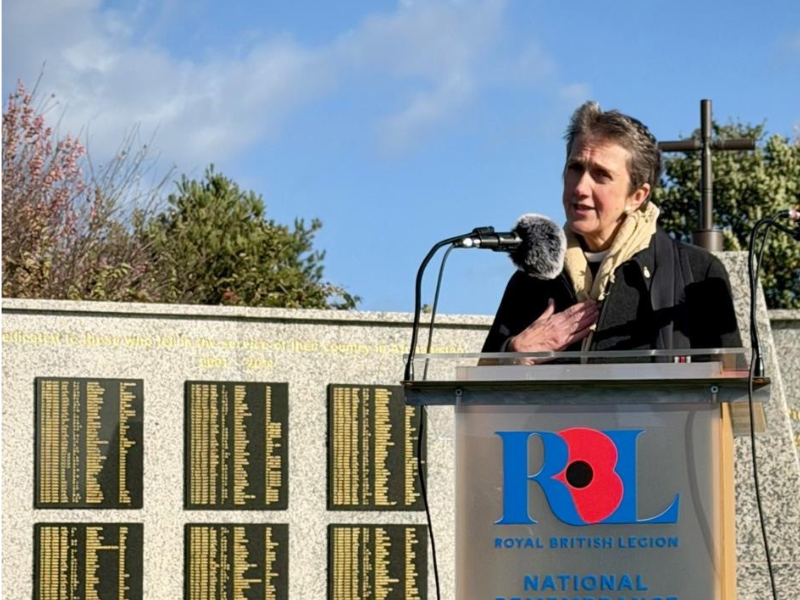
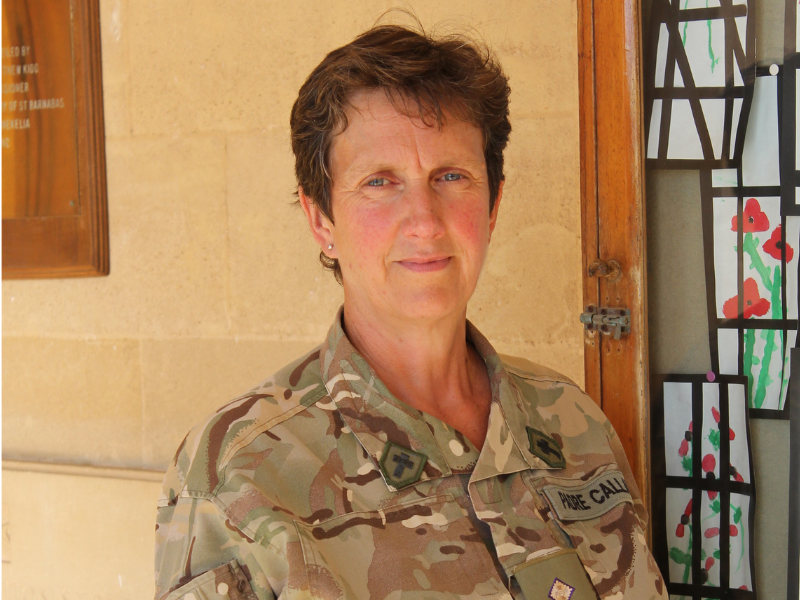
In this reflection, the Revd Clare Callanan, a retired United Reformed Church minister and former British army chaplain, who serves as Chaplain to UK Afghanistan Veterans’ Community, explores where the rituals observed on Remembrance Sunday and Armistice Day come from:
What are these rituals we observe every Remembrance Sunday and Armistice? The sounding of the ‘Last Post’, the time of silence, the sounding of ‘Reveille’? In the aftermath of the First World War, seemingly almost unconsciously, these rituals were assembled. Some of which are thousands of years old.
The ‘Last Post’ is a British Army bugle call going back to the 18th Century. Sounded on a battlefield it is a rallying call for the wounded and those who have become separated: ‘The day is done, the fighting is over. Here is rest, here is safety, here are your comrades.’ A sound of hope for those maybe lost and confused. It is also played for all who have died, holding the recognition of our mortality and death.
‘Reveille’ ends the time of silence. It was the first bugle call of the day: ‘Everyone get up!’ It is the call to awake, to sense newness of life, to face the day. It sounds as a symbol of hope, of joy, of renewal.
The time in silence between ‘Last Post’ and ‘Reveille’ is the most charged of all and the oldest element of the ceremony.
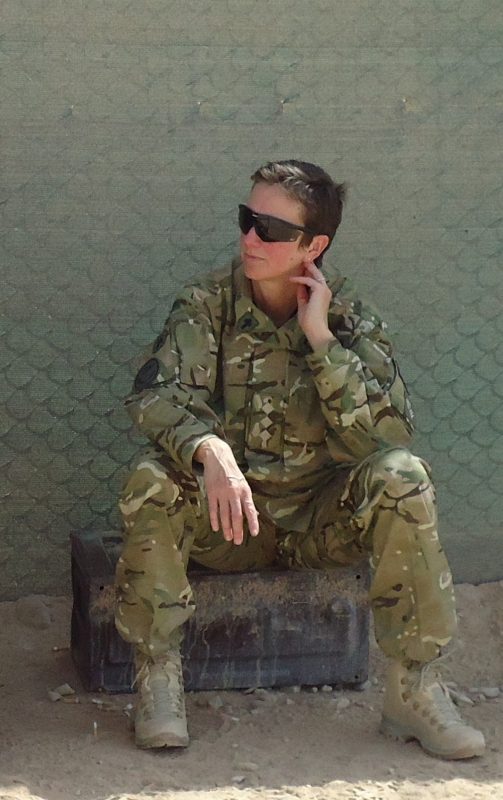
For thousands of years, soldiers have guarded their dead after a battle. Symbolically, the silence is not just a pause for reflection. Sandwiched between the last and first bugle calls of the day, it is a ritualised night vigil honoured by comrades, to guard their dead from insult and further harm. By standing watch today, we not only re-member them but we pledge ourselves to protect them from dishonour.
The dead were brought in and laid to rest in a square. Today that is the parade square, deemed hallowed ground and respected by all.
So, this is what we do on Remembrance Sunday and Armistice Day. We call to the spirits of our slain and announce that it is nightfall. We stand vigil to guard and remember them in silence on hallowed ground. We end the darkness with the implicit hope that we shall meet together again.
We will remember them.