

Church members have learned how a growing national network is helping congregations welcome refugees and asylum seekers through practical support, friendship and belonging.
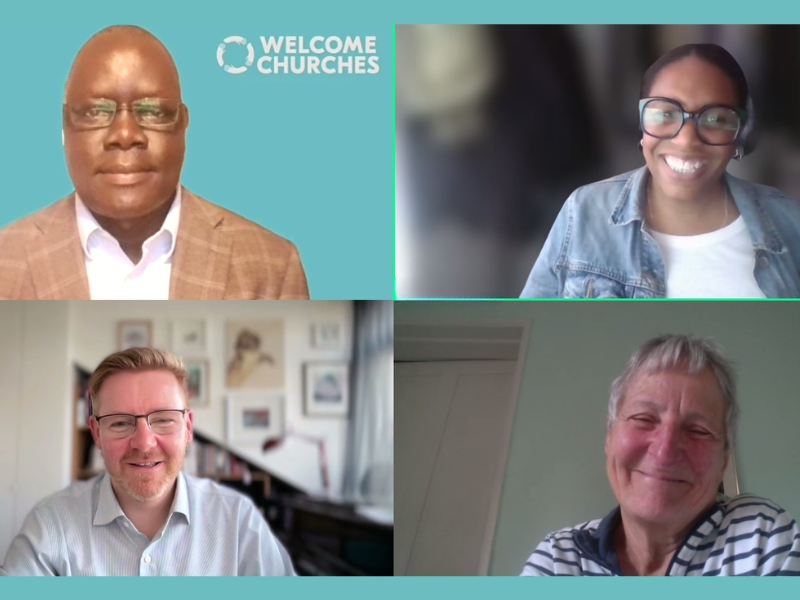
During a webinar held on Wednesday (10 June) and hosted by the United Reformed Church Public Issues Team, the Revd Samuel Luak, Church Engagement Manager for Welcome Churches, explained how the initiative began as a small grassroots response in Derby, where local volunteers recognised the needs of newly arrived refugees.
“What makes Welcome Churches unique is that it began as a local church ministry,” he said. “Ordinary people saw a need and asked, ‘What can we do?’ That spirit continues today.”
The network has since grown significantly and now includes more than 1,400 churches across the UK, working together to ensure that refugees and asylum seekers can find a friendly church community close to where they live.
Gabrielle Pagan, an Elder at Diss URC in Norfolk, described how a single coffee morning grew into a wider community initiative, connecting refugees with opportunities to use their gifts. Two participants, both trained opera singers, went on to perform concerts locally with the support of the church community.
Samuel also highlighted the complex challenges faced by those arriving in the UK seeking safety, including isolation, language barriers, trauma and housing difficulties.
“When people arrive, they often don’t know anyone,” Samuel said. “They may feel alone, struggle with language, and carry the trauma of what they have experienced. Churches can play a vital role in responding to that.”
Welcome Churches encourages congregations to respond in ways that suit their local context. Activities vary widely, from English language cafés and practical support to building friendships and offering hospitality.
“Welcoming people is about opening our hearts and our communities,” Samuel said. “Even offering welcome for one day is a powerful witness.”
While there are similarities with other initiatives such as the City of Sanctuary movement, Samuel explained that Welcome Churches focuses particularly on equipping and resourcing local congregations.
“Our role is to support churches to communicate welcome in practical ways,” Samuel said. “Every church decides what they can offer and we provide training, resources and encouragement.”
During breakout sessions, participants explored practical ways their churches could get involved, identifying opportunities, barriers and next steps for action.
“You don’t need to know everything,” added Samuel. “The first step is simply to be a welcoming space. You can learn as you go.”
Joining the Welcome Churches network is free, and churches are supported with training, resources and guidance as they begin or develop their work.
Looking ahead, the network hopes to expand further so that every refugee arriving in the UK can find a welcoming church within walking distance of where they live.
“This is something we can all be part of,” Samuel said. “Together, we can create communities where people feel they belong.”
To learn more about joining the network, visit the Welcome Churches website.