

URC churches have been encouraged to consider how their buildings, relationships and existing activities can become places where communities come together and encounter the Christian faith.
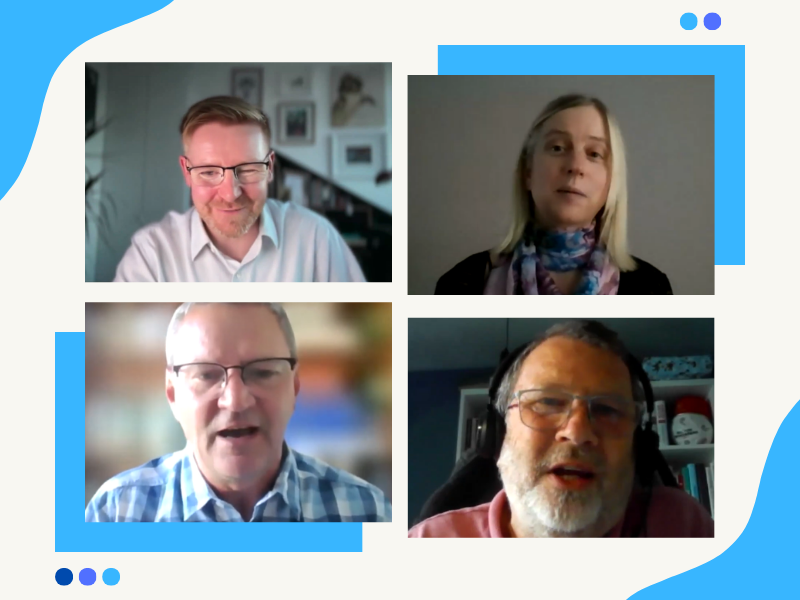
The call came during a recent Public Issues webinar exploring how churches can connect community engagement with worship and faith. Mike Hart, Transformation Director for North Western Synod, highlighted the experience of churches involved in the Warm Welcome Spaces campaign, which showed how opening church buildings could build on existing hospitality while creating opportunities for deeper engagement with local people.
He also challenged churches to see worship and community outreach as part of the same witness to faith in Jesus Christ, rather than separate activities.
A community centred on Jesus
Keynote speaker Nigel Adams, author of Communities of Hope, shared his experience of founding Hope Nottingham 16 years ago. Growing from work based at a former URC building, the charity developed into a network of community hubs offering activities including a café, food bank, community meals, benefits advice and a job club.
Nigel said the most important outcome was not the activities themselves but the community that developed around them.
“The most precious thing about all of this wasn’t the different services that were provided. It was the fact that we were coming together as a community, growing and living and loving around the person of Jesus Christ.”
The community’s activities were rooted in prayer. At the café, people were invited to a short time of Bible reading, reflection, silence and prayer before opening. Nobody was required to participate, but the practice made it clear that Jesus was at the centre of the community.
Nigel said this created natural opportunities for conversations about faith. People who initially came for practical support sometimes went on to explore Christianity through shared life, prayer and relationships. He stressed that this was not about imposing faith, but creating an environment where people understood what the community stood for and an opportunity for them to engage in it.
Starting small
Nigel encouraged churches to establish a consistent rhythm of prayer and Christian activity alongside community work, using informal activities such as crafts and conversation to help people explore faith.
He emphasised listening to local people and finding approaches suited to each community. Churches do not need to recreate an established community hub overnight: they can start small, work consistently and seek support from peers and local partners.
Priesthill URC: a church at the heart of its community
Alice Gilbert, a Church Related Community Worker, described the experience of Priesthill URC in Glasgow. With just nine members and two adherents, the church nevertheless sees its building as a hub for the community.
In an area facing significant deprivation, the church runs a weekly café, ladies’ group and Girls’ Brigade, while partnerships have enabled a wider range of activities.
Working with Urban Roots, the church restored its community garden, creating opportunities for gardening, art projects and further partnerships. Other organisations have helped provide a weekly breakfast, Christmas hampers, a daytime disco for over-50s and an International Women’s Day event attended by more than 90 women.
Alice stressed that this work takes time.
“Take your time, get to know what your assets are as a church and what it is you can offer,” she said.
Alice also encouraged churches to explore their neighbourhoods, listen to residents and identify existing organisations that could become partners.
Making faith visible without pressure
The webinar also considered how churches can make their Christian identity visible without making people feel pressured. Suggestions included prayer trees and prayer boxes, and inviting people to pray with the church rather than the church simply offering to pray for them.
Contributors also highlighted the value of volunteers who are available to listen and build relationships. Community activities do not have to be explicitly faith-based to create opportunities for conversations about Christianity.
Creating spaces… without a church building?
Helen Snashall shared the experience of Waverley URC, which went to extreme lengths to connect with the community: they sold their aging, costly building and began to meet in the Focal Community Centre in Huddersfield. It had a transformative effect on how the congregation engages in mission and enabled the church to focus on the people they were called to be with.
This difficult decision, leaving a building that had been a centre of worship for generations of worshippers, won’t be the right step for every church, but it demonstrates that it is possible to radically rethink how we invest our time and resources, and the fruit of it might surprise us!
Everyone has something to offer
The webinar encouraged smaller and older congregations to start with what they can realistically sustain. People unable to undertake practical tasks can still offer friendship, prayer or a listening ear, while churches can share resources and volunteers with neighbouring congregations and local organisations. Alice advised churches to reach out to their synod office to enquire if a Church-Related Community Worker (CRCW) based elsewhere in the synod might be able to offer occasional advice and support – ‘borrow a CRCW’ and avail of their training and experience.
The overall message was simple: churches do not need all the answers or resources to create something on a large scale. They can look at what they already have, listen to their communities and take one small step forward.
Churches do not need to recreate the examples they have heard about. As one contributor put it, “Do the great things you’re already doing with your community, but make sure you give them opportunities during the week to experience something of the faith that you hold. A simple time of prayer (spoken or silent) before and after an activity could be the start of a journey of faith for the people in your neighbourhood.”
Details of the next A Church With People at the Margins webinar are as follows:
Webinar 4: 16 November – Community Organising
In an increasingly individualistic and hostile society swayed by the loudest and the most privileged, how do we buck the trend and recapture the joy of collaboration and community? How can a community speak and act together to make a positive difference? And what has the church to offer into the mix?
Register for webinar 4: 16 November – Community organising. The webinar starts at 7pm.