

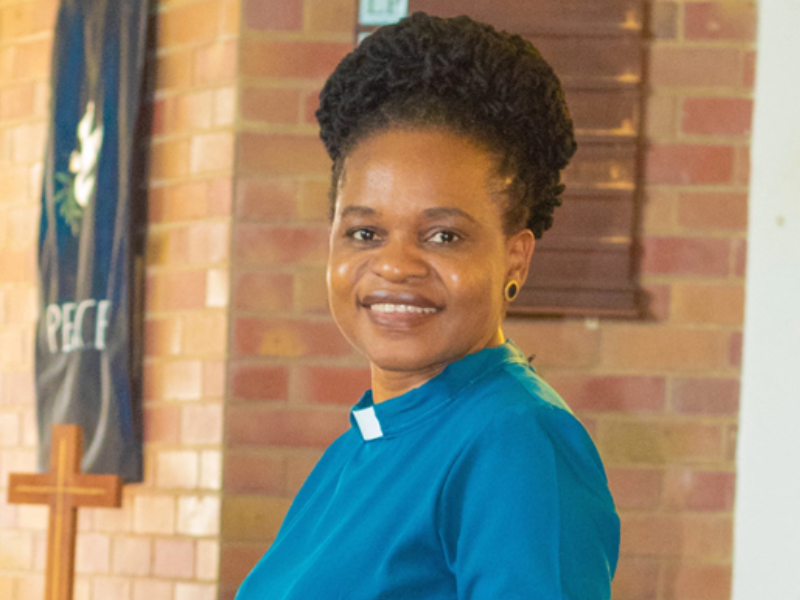
At the end of a visit to the UK in May, the Revd Lydia Neshangwe, President of the All Africa Conference of Churches, said she would return home with “a sense of hope” because of the work being done by the United Reformed Church (URC) in Britain, nationally and locally.
Lydia Neshangwe met representatives of URC synods at the Offices of General Assembly in London, to hear about the development of partnerships with synods and local communities in Africa.
She said she had seen many British flags in London and the south of England and been made aware of their links with nationalist campaigns and protests. But she said: “I want to applaud you for the work you’re doing for justice, with ‘foreigners’, and on migration issues, disregarding hatred and putting out love where there is hatred. When I leave London tomorrow, I’ll leave with a sense of hope, not with disappointment, because of the work you’re doing to build the Kingdom of God.”
At the gathering, hosted by Karen Campbell, the URC’s Head of Global and Intercultural Church, URC representatives shared their experiences of setting up and working to maintain partnerships with synods across Africa.
The Revd Lythan Nevard, Moderator of the URC’s Eastern Synod, said her Synod saw the twinning of individual churches as “a key plank” of their approach, and said, “You get to understand what expressing faith looks like in a different context.” She said the Synod is trying to improve its use of online communications and wanted to encourage an exchange of videos between partners that explore responses to Bible readings out of their different contexts. This idea was well received, though there was also a strong understanding that relationships are best built in person where possible.
Some participants said that getting the balance of a partnership right can be difficult. Because representatives of partner Churches in Africa may encounter difficulties getting visas to enter Britain, exchange visits can be one-sided. Concern was also expressed about the carbon footprint associated with long-distance travel between continents.
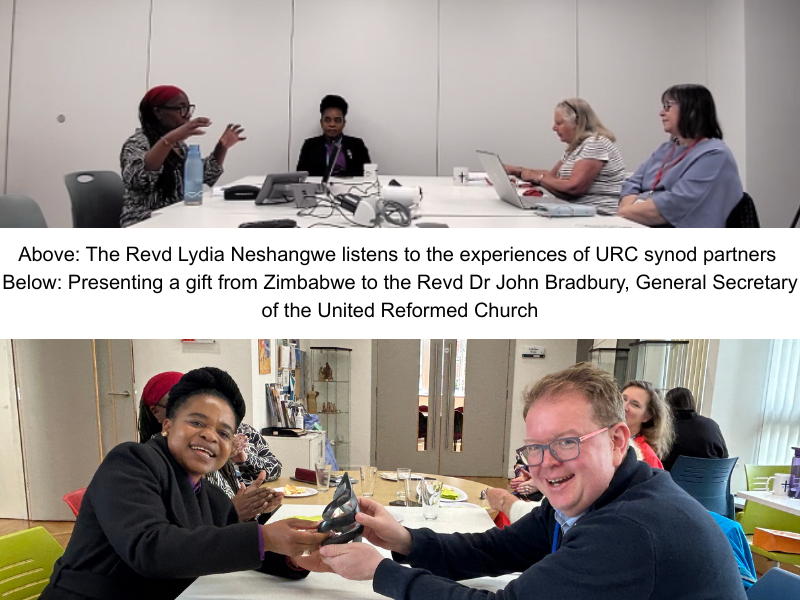
Speaking to these ecological concerns, Lydia agreed that visits should be well-planned and meaningful, limiting use of fuel as much as possible. However, she also reflected on the saying, “Give a man a fish and he’ll eat for a day; but teach a man to fish and he’ll eat for a lifetime”, adding that it is important for people in the West to “come and encounter, so you understand how we fish, and why we fish the way we do”.
She said that only by being present in Africa can British partners really understand why African churches do what they do. Worship with 1,000 people needs to be experienced in person, for example. You also come to understand that services are long not least because many people have walked two hours to get there. They don’t want to worship for only an hour and then go home again; they need time to rest and to share a meal.
Lydia said that, in the past, international church partnerships have often been about giving money, but now “they must be about relationships”. She said Africans may not have much money but they have a sense of community and relationships. Partnerships “can share spiritually”, she said, and shared prayer is powerful regardless of distance.
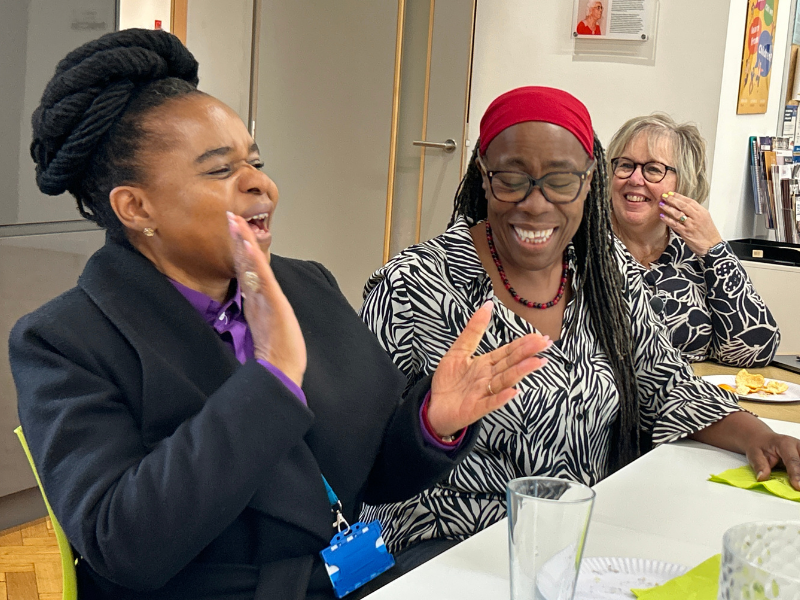
Lydia Neshangwe is the immediate past Moderator of both the Council for World Mission and the United Presbyterian Church in Southern Africa, and is a serving minister in Mutare, Zimbabwe, with her husband Paul.
Images by All Africa Conference of Churches and Andy Jackson