

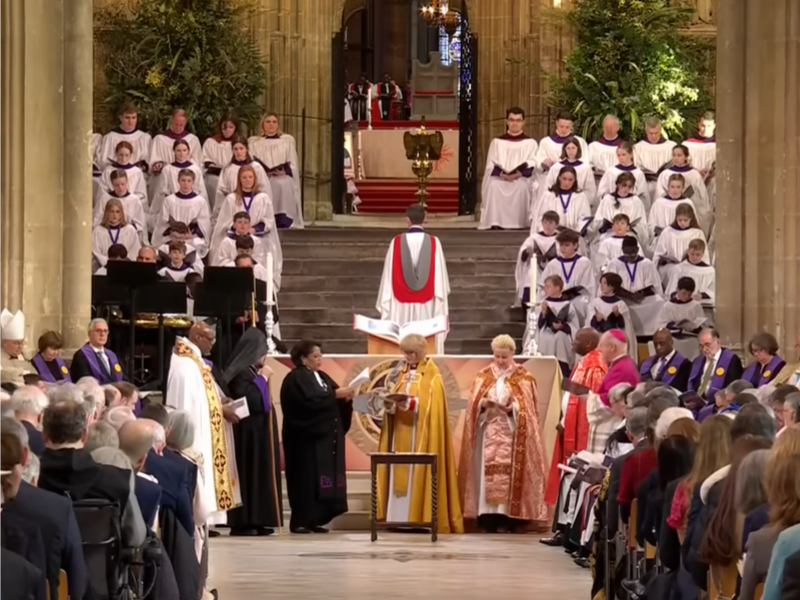
Why the presence of a Black woman at the Archbishop of Canterbury’s installation still matters.
Friday 3 July marks 100 days since the installation of the Most Reverend and Right Honourable Dame Sarah Elisabeth Mullally DBE as the 106th Archbishop of Canterbury.
The Revd Dr Tessa Henry Robinson, a United Reformed Church (URC) minister — who serves as Moderator of the Free Churches Group, a President of Churches Together in England, and one of the Presidents of the Council of Christians and Jews — was asked what her presence at the installation meant to her at a recent meeting of the URC’s Racial Justice Advocates. Here is Tessa’s powerful response:
My presence at the installation of the Archbishop of Canterbury carried significance on several levels and each of these mattered deeply.
I attended in my capacity as one of the Presidents of Churches Together in England and through my role as Moderator of the Free Churches Group. My presence was ecumenical, public, and representative of a wider Christian witness; one that recognises that moments such as these reach beyond one denomination. They speak into the life of the whole Church and reveal something about where we are, what we are willing to affirm, and what kind of future we are prepared to inhabit together.
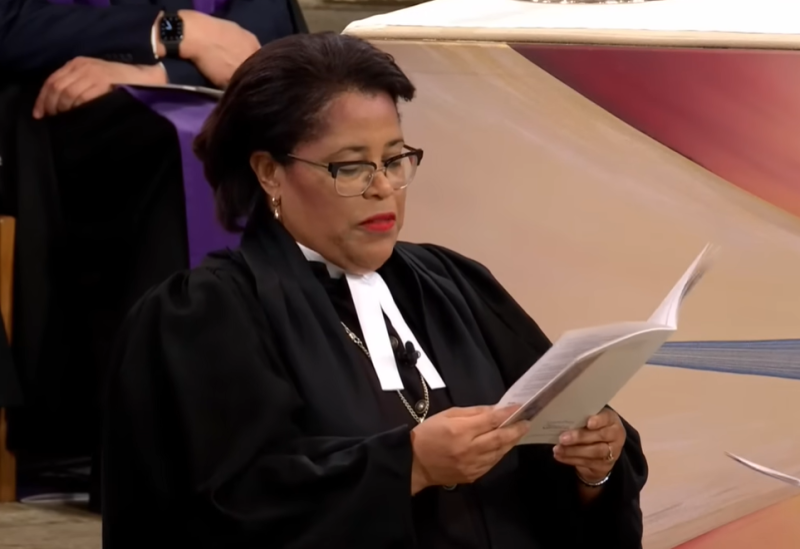
On a personal level, I felt it was important to be there in support of a woman stepping into a role of immense visibility and responsibility at a time when there were already strong voices seeking to diminish that moment.
There were those who opposed her appointment simply because she is a woman. There were those who sought to deny its legitimacy before she had even begun. For me, that was not a small matter because it tells us that the struggle around women’s leadership in the Church remains active, organised, and deeply theological in the ways it frames power, authority, and permission. My showing up was an act of solidarity and a way of saying that when a woman is called into a place of leadership, especially under pressure, she should not enter that space alone.
My attending also held a denominational significance for me. I am a minister and a visible member of the United Reformed Church, a denomination that, by the grace of God and through the courage of those who pressed for change, was among the early churches in this country to ordain women. That history is important! It reminds us that progress in the Church never falls from the sky. It comes through prayer, struggle, courage, support, biblical wrestling, institutional challenge, and the costly persistence of those who reject the idea that the image of God can only be contained within male authority. My presence was also a quiet testimony to a tradition that has sought, however imperfectly, to widen the space for women’s full participation in ministry.
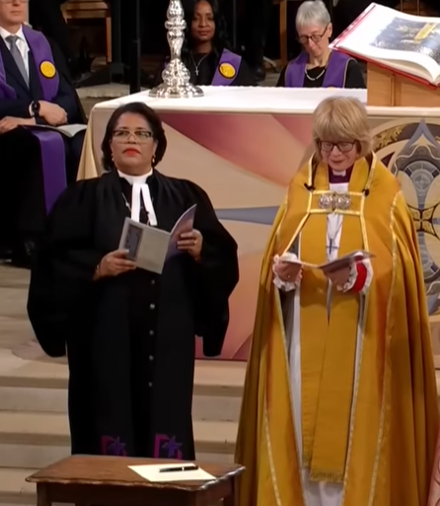
I also attended as the first Black woman to serve as United Reformed Church General Assembly Moderator. That also shaped the meaning of the moment for me. Because whenever a Black woman stands in spaces of ecclesial significance, that woman carries more than the title she bears. She carries memory, struggle, ancestry, and the full force of those who are overlooked, patronised, resisted, or welcomed only on terms set by others. She also carries the knowledge that institutions often find symbolic change easier than structural transformation. She carries the hope that presence can become participation, and participation can become change.
From a sociological perspective, moments like this hold significance because institutions teach through symbols as much as through speech.
Who is seen at the centre matters. Who is trusted with authority matters. Who is blessed, affirmed, robed, seated, heard, and publicly received, matters. These things help shape the moral imagination of a community. They signal to girls and women whether they are truly called or merely tolerated. They tell Black women whether leadership can ever hold their full humanity, their intellect, their spirituality, and their experience without requiring them to shrink. Representation and participation alone do not complete the work; but they do break open the old script and make new possibilities visible.
From a theological perspective, I believe such moments push us toward the God who keeps calling beyond the boundaries people construct. The witness of scripture is full of God raising voices that established systems have discounted. God entrusts testimony to those whom society has treated as secondary. God brings good news through those the gatekeepers did not expect. If we look carefully, we will see that the resurrection itself arrives first through the witness of a woman, and we would also notice that Pentecost disrupts the fantasy that God speaks through one kind of body, one class, one gender, one people.
The Spirit keeps moving ahead of the Church’s comfort, drawing us toward a wider obedience.
That is why my presence at the Installation of the 106th Archbishop of Canterbury mattered to me. It was never simply about attending a grand occasion. It was about what kind of Church we are becoming. It was about whether we have the courage to recognise the gifts of women when those gifts are exercised at the highest levels. It was about whether we are willing to confront the misogyny that still circulates in religious language, religious culture, and religious structures. It was about whether the Church can receive leadership from those whose very presence exposes the limits of old assumptions.
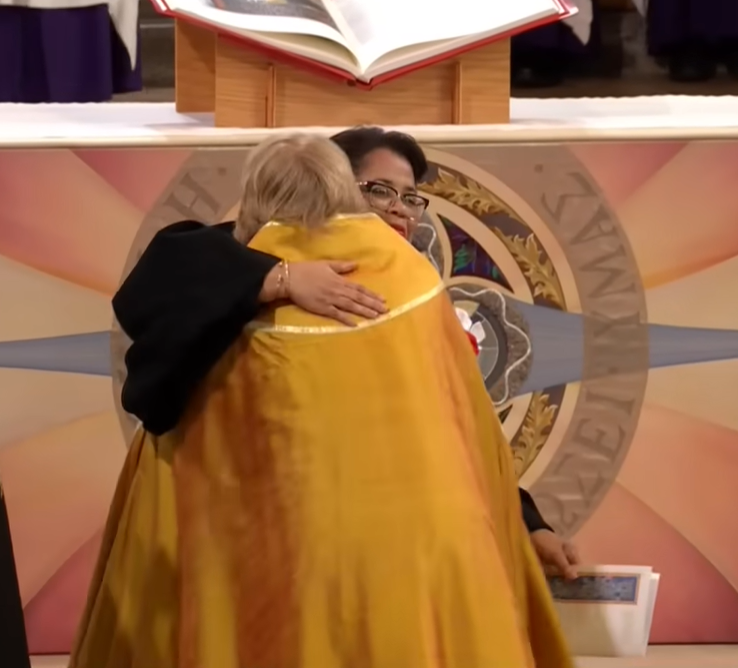
For me, being there was an act of witness. It was an act of encouragement. It was an act of solidarity. It was also an act of hope; that is, hope for a generation present, and to come.
Because every time a woman steps into a place where some said she could never stand, the Church is offered a chance to become more truthful. And every time a Black woman stands in such a space, the Church is confronted again with the breadth of God’s calling and the poverty of its own exclusions.
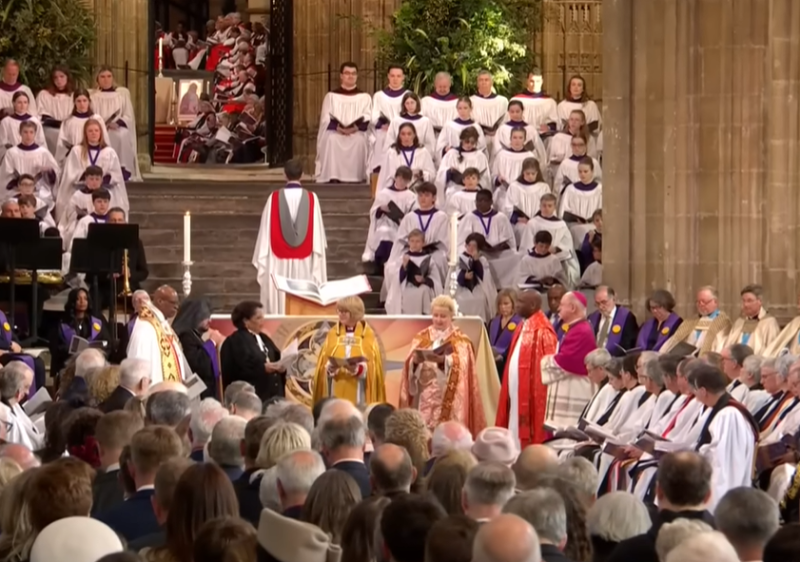
I was glad to be at the installation service; glad to stand with a woman carrying a demanding call; glad to stand as part of ecumenical bodies; glad to stand as a daughter of a denomination that has sought to honour women’s ministry; glad to stand as a Black woman in the Church, bearing witness to the God whose call continues to exceed our boundaries, disturb our certainties, and draw us further into justice.
Images: Church of England.