

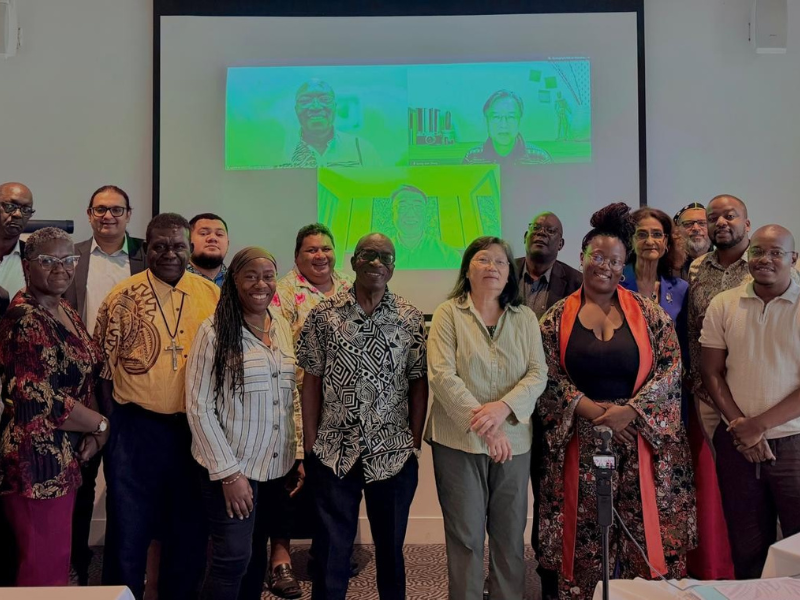
Karen Campbell, Head of Global and Intercultural Church for the United Reformed Church, has said The Onesimus Project (TOP), an important Council for World Mission (CWM) initiative has the potential to be “really exciting”.
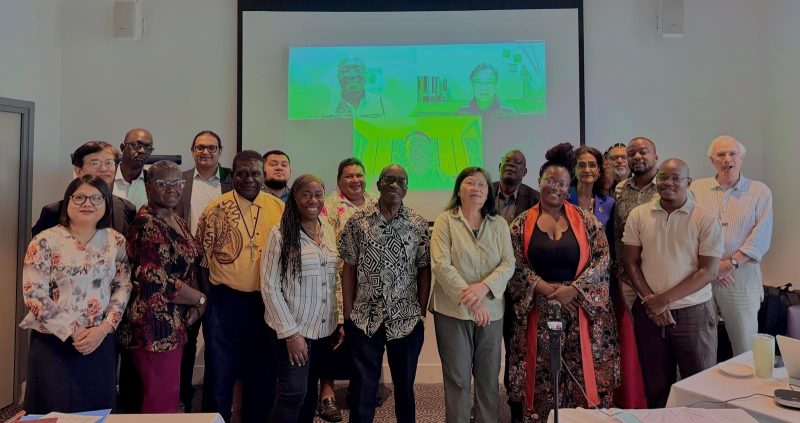
As a member of the TOP core group, Karen travelled to Antananarivo in Madagascar for a planning meeting, held from 7 to 8 May, to help reflect on the future direction of the programme and its role in strengthening the CWM’s global witness for reparative justice, truth-telling, and healing.
The Onesimus Project grew out of CWM’s Legacies of Slavery Project, initiated in 2017, but broadened the focus to include Modern Day Slavery. The meeting, chaired by the Revd Dr Roderick Hewitt, focused on reparative mission, decolonial theological formation, and transformative ecumenism.
Karen said: “It is important for the URC to have a voice in this forum. We have been part of CWM’s ‘Legacies of Slavery’ journey since its inception, through its transition into ‘The Onesimus Project’, and are now helping to shape its future direction. This matters.”
At the meeting, core group members reaffirmed a shared commitment to deepen prophetic witness, anti-racism advocacy, transformative mission practice, and decolonial theological education across member churches and communities. Discussions also explored how reparative justice can become more deeply embedded within the life and mission of CWM’s international partnership.
Karen added: “TOP is striving to be much more than a funding stream. It is seeking to initiate and resource a missional movement – impacting what the member churches do, how they do it, and why.
“There have been numerous CWM initiatives which seek to resource the church from within – including the Mission Support Programme which funded our ‘Walking the Way’ focus in recent years, encouraging discipleship within the URC. TOP, however, focuses on ‘Church beyond the walls’ – what can mission look like when we venture outside of our buildings and outside of our comfort zones? This has the potential to be really exciting.”
CWM General Secretary Revd Dr Jooseop Keum joined the meeting online and reaffirmed the organisation’s commitment to reparative justice and mission “from the margins with the margins”.
He said: “Member churches must move beyond symbolic remembrance toward concrete acts of justice, restoration, and communal healing.”
The URC has already taken steps in this work, including a Statement of Confession and Apology for the role of the URC’s antecedent bodies in transatlantic slavery, their benefit from it, and the denomination’s failure to dismantle the legacies of racism and inequity which persist today; the apology was warmly welcomed by partner churches in Jamaica in 2024, through the Churches’ Reparations Action Forum (CRAF).
The URC is now working with CRAF on the New Free Villages, a transformative project which aims to see historic Churches in Jamaica donate land inherited after slavery and colonisation. UK partners, including the URC, are helping to support the development of housing and infrastructure on that land. The vision is to create sustainable communities, with homes and small plots of land enabling residents to grow food and generate income.
Image: Council for World Mission.