Telling a story for others
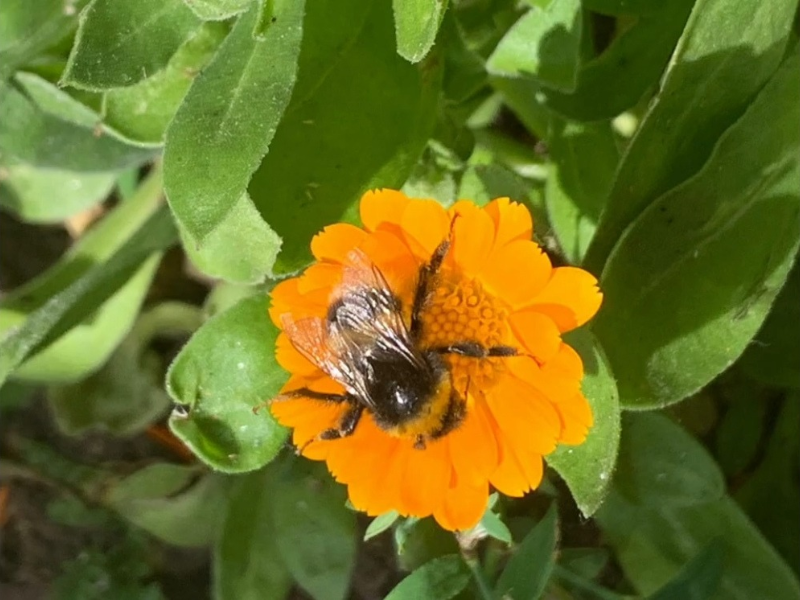
How do you create a vibrant oasis the whole community can appreciate?
Through a gardening club formed in 2023, together with some creative partnering within the community, Vine United Reformed Church in Ilford, Essex, has achieved just that.
The club’s work was highly commended in the 2025 United Reformed Church Community Awards. Here, church Elder Peter Musgrave tells their story and offers some tips for others to pick up the baton.
A missional gardening club
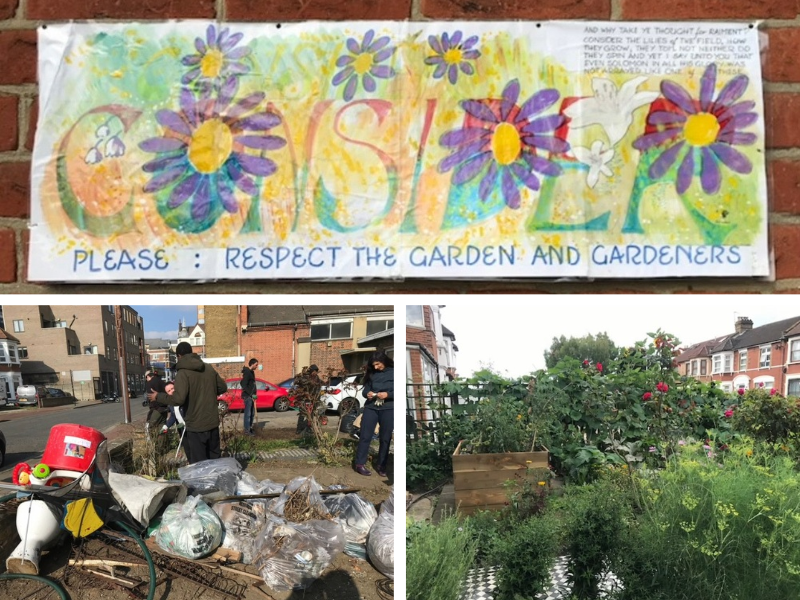
Vine URC, Ilford, is situated within a built-up urban landscape in East London. As a congregation, we saw an opportunity to create a gardening club which would transform not only our own church grounds but also be a blessing to the local community and, helpfully, inspire greening elsewhere in urban environments.
We had three broad aims:
Firstly, we wanted to promote the wellbeing of previously homeless residents of nearby Malachi Place, a pop-up hostel in Ilford run by the Salvation Army.
Secondly, we wanted to create a new community garden outside Vine URC in a nature-depleted part of Ilford, which would be both productive and wildlife friendly.
And thirdly, we saw the potential to create a peaceful, calm place for members of a domestic violence project, a children’s playgroup and local neighbours.
By working with our local community, we were able to complete the project far more effectively than we could have done on our own, sharing and learning skills that had a positive impact on members of the local community and inspiring further greening in other previously concrete-dominated corners of the local area.
It has been exciting to see the gardens take shape and come to life. We have seen vegetable crops growing, enormous sunflowers, and butterflies, bees and other pollinators feeding in the garden.
The Malachi residents have brought their own experience of farming in their home countries and have used the vegetables they grow in their cooking classes to create meals.
Watch this YouTube video to hear Peter tell the story of the Vine Gardening Club.
Transition Town
 Vine URC planted wildlife-friendly hedge plants with the support of Transition Town Ilford in 2018. The Transition Towns and Communities Movement is an international network of communities that envisions “a world where every individual can become part of a supportive community, feeling safe, welcomed, and empowered to thrive”.
A member of the Vine congregation, Isaac Harvey, produced a short video showing the planting of the hedges. Isaac said that, as Ilford town centre looked set to become dominated by large, high buildings, “it is good to see trees also coming in to bring hope. It shows what can be done by a small group working together, and in a short period of time, and where the cooperation and support of those who do have some green spaces is sought out.” By 2026, the hedges were flourishing.
Tips for churches
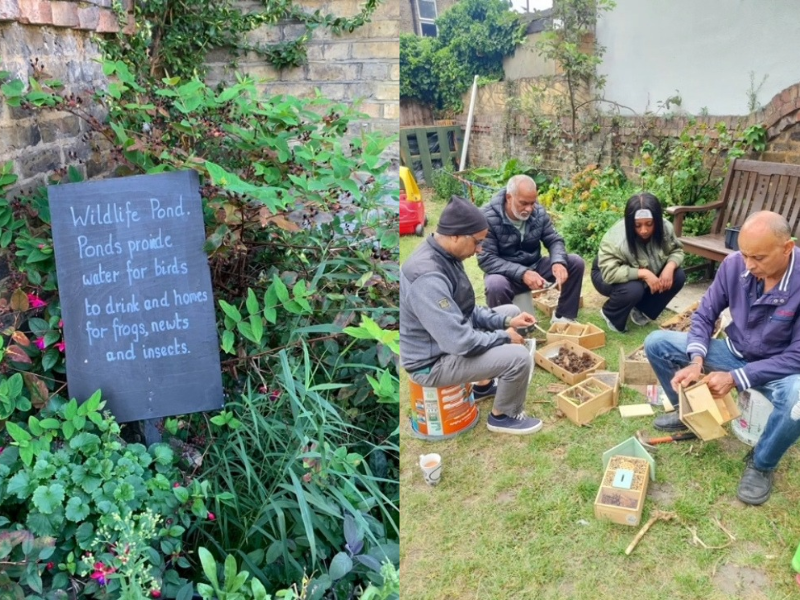
The Vine URC Gardening Club is a venture that could easily be replicated by any church, even with a tiny piece of land, and a small team of willing volunteers from the church or the local neighbourhood. Here are some of the learnings that Vine URC Gardening Club have picked up on the journey:
- Developing partnership working over time
- Identify a potential partner group in your local community. It could be a group of people with mental health conditions, or refugees or volunteers from another existing group in your neighbourhood.
- Hold informal conversations to develop a relationship and build understanding and trust. Listen carefully so that any shared project becomes one that all the participants can benefit from.
- Once the idea is agreed, set up the project, identifying any concerns or constraints e.g. safeguarding and health and safety procedures, and respective roles of the partner group and the church.
- In our case, we also had conversations with the local playgroup/nursery who use one of the gardens during the week.
- Get the backing and cooperation of your church
- We had received the backing and cooperation of our church. They were glad to let us just get on with it!
- They let us use a shed to store tools and the community house (a former manse adjacent to the church building) for refreshments and meetings.
- We report back regularly at Church Meetings. The members have appreciated the positive effect that the gardens have had on the local environment and the garden’s users.
- Keeping in weekly communication with our key partner
- Keep communication ongoing and regular. In our project, a staff member and a volunteer from Malachi Place always accompany the residents. If a problem comes up, they are on hand to respond quickly.
- Similarly, if the session is positive (which it almost always is), then news can be carried back to Malachi Place, with lots of positive affirmation.
- The walls at Malachi Place have large photos of various gardening club sessions.
- We write an email to the Malachi volunteer coordinator every week to let her know what jobs we plan to do that week, so that there is a regular link.
- Budget
- Find a small budget. A generous church member gave us a donation to start so that we could buy plants, put up fence and trellis, buy tools etc. That was very helpful.
- The United Reformed Church offers small grants to churches that are seeking to engage in projects with the community, such as the Mission Enabling Fund. You can find out more at urc.org.uk/grants-funding-opportunities.
- Your local council might be able to offer some support too. It’s worth sharing your plans and asking them if they can assist in any way.
Thanks and acknowledgements
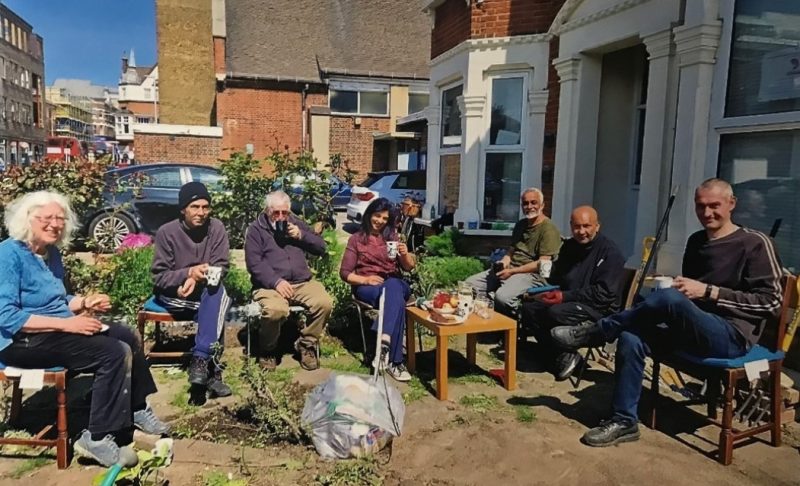
- The Vine URC Gardening Club
- Ilford in Green (London Borough of Redbridge) neighbourhood team – Beth, Manisha and Derek
- Nadine and staff and volunteers of Salvation Army
- Clients (volunteers) of Project Malachi
- Generous donation from a church member
- URC Community Award money
More information
You can see updates from the Vine Gardening Club on our webpage.